

Top Factors to Consider When Hiring Booth Builders for CEDIA Expo
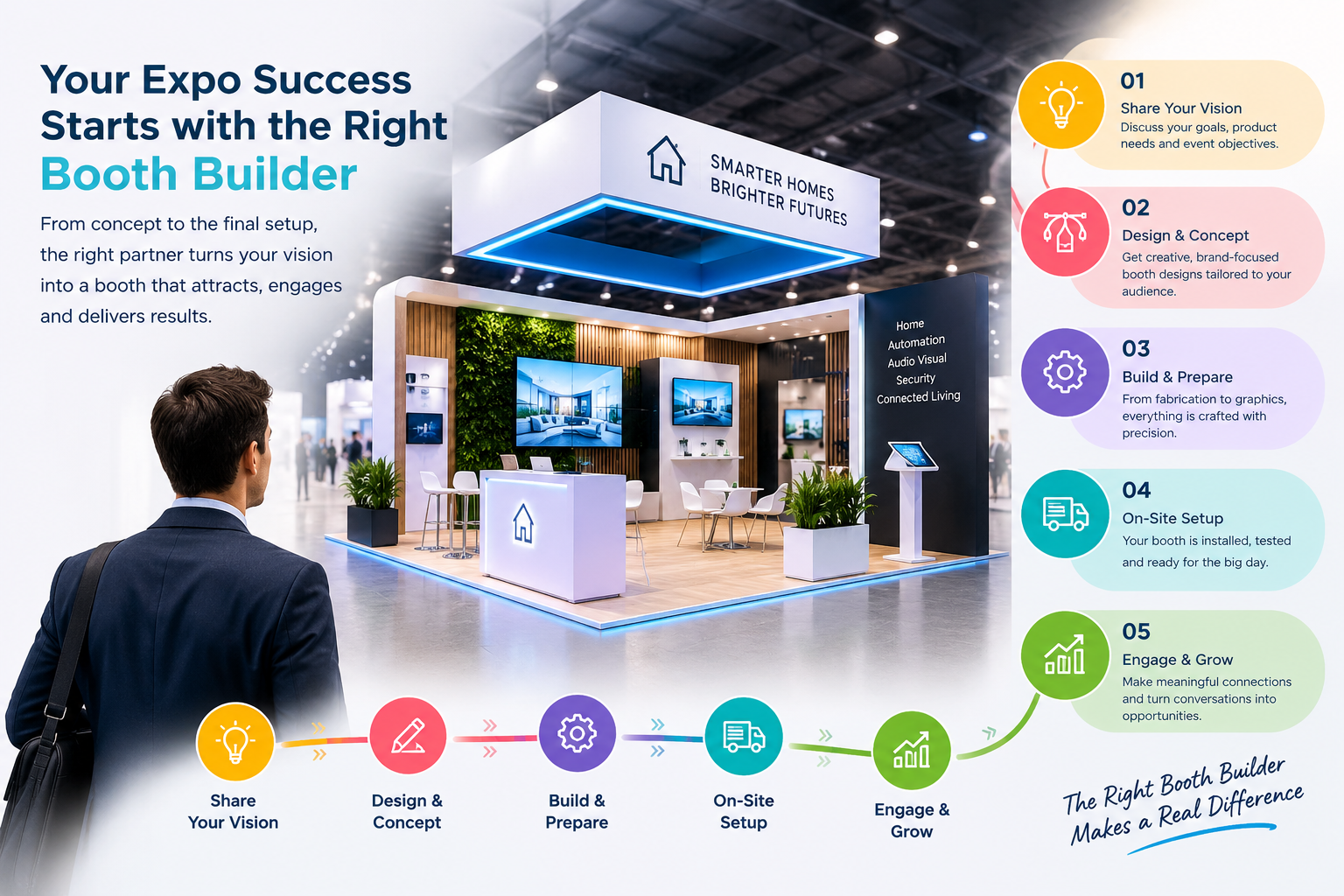
Participating in CEDIA Expo gives smart home technology brands, audiovisual manufacturers, home automation companies, and residential technology integrators an opportunity to showcase their latest innovations. However, attracting the right audience requires more than displaying products in an exhibition hall. Businesses need a well-planned booth that communicates their value, supports live demonstrations, and encourages meaningful conversations. Selecting experienced Booth builders for CEDIA Expo is an important step toward creating an exhibition space that reflects the brand's identity and business objectives. By evaluating design expertise, technical capabilities, project management, budget, and installation support, exhibitors can choose a partner that helps them prepare for a successful event.
1. Understand Your Exhibition Goals Before Hiring a Booth Builder
Before approaching booth construction companies, identify what your business wants to achieve at CEDIA Expo. Clear goals help you evaluate potential partners and select a design that supports your marketing strategy.
Some exhibitors want to launch new products, while others focus on generating leads, strengthening distributor relationships, or demonstrating integrated smart home solutions.
Define your primary objectives
Start by identifying your most important exhibition priorities.
-
Brand awareness: Increase recognition among smart home professionals and industry buyers.
-
Product demonstrations: Show how your products perform in real residential environments.
-
Lead generation: Connect with qualified prospects and potential business partners.
-
Product launches: Introduce new technology through demonstrations and presentations.
-
Relationship building: Arrange conversations with integrators, distributors, designers, and decision-makers.
Your objectives should influence every major booth decision, including layout, product placement, signage, lighting, and meeting space.
Communicate expectations clearly
When speaking with potential booth builders, explain your target audience, product range, budget, available floor space, and desired visitor experience.
A detailed brief makes it easier for a design team to recommend a suitable solution instead of offering a generic exhibition structure.
2. Evaluate Experience With Technology-Focused Exhibitions
Not every exhibition contractor has the same experience. A company that primarily builds conventional display stands may not have the expertise required for a booth featuring integrated home automation, audiovisual equipment, connected devices, and live technical demonstrations.
When comparing Booth builders for CEDIA Expo, review their experience with technology-oriented exhibits and ask how they handle specialized requirements.
Review relevant projects
Ask to see previous projects involving products or demonstrations similar to yours. Look for evidence that the builder understands how to integrate physical displays, digital content, lighting, electrical systems, and visitor interaction.
Useful questions include:
-
Have you worked on technology-focused exhibition booths?
-
How do you plan demonstrations involving multiple connected devices?
-
Can you accommodate specialized product mounting and cable management?
-
How do you coordinate technical requirements with other service providers?
-
What procedures do you follow when a demonstration system fails?
The answers can help you assess whether a potential partner understands the practical demands of your exhibition.
Look beyond visual appeal
An attractive portfolio is useful, but appearance alone does not prove that a contractor can deliver a reliable booth.
Review the functionality of completed projects. Consider whether the layouts support visitor movement, whether demonstrations appear accessible, and whether product information is easy to understand.
3. Check Booth Design and Customization Capabilities
Your booth should represent your brand while supporting the products and services you want to promote. A flexible design approach allows you to create a distinctive environment without sacrificing usability.
Request a customized design concept
A professional booth builder should begin by understanding your objectives and developing a concept around them.
Depending on your requirements, the design may include:
-
Branded reception or welcome areas.
-
Product demonstration stations.
-
Interactive digital displays.
-
Smart lighting demonstrations.
-
Home theater or entertainment zones.
-
Technical consultation areas.
-
Meeting spaces for qualified prospects.
-
Storage for equipment and promotional materials.
Each feature should have a clear purpose. Adding unnecessary elements can increase costs and make the booth harder to navigate.
Review 3D renderings and floor plans
Ask for design drawings or 3D renderings before approving fabrication. These visuals can help you assess the booth's appearance, sightlines, circulation, and product placement.
Review the design from the visitor's perspective. Can someone walking through the aisle identify the company quickly? Is the main product visible? Can visitors enter the booth without feeling obstructed?
Resolving these questions during the design stage is usually easier than making changes during installation.
4. Understand Custom Booths Versus Modular Booths
One of the most important decisions is whether to invest in a custom booth, a modular system, or a combination of both.
The right option depends on your exhibition schedule, budget, branding requirements, and technical needs.
|
Consideration |
Custom booth |
Modular booth |
|---|---|---|
|
Appearance |
Highly tailored to the brand |
Uses a flexible system of components |
|
Layout |
Can accommodate distinctive configurations |
Adaptable within system limitations |
|
Reusability |
Depends on the original design |
Often suitable for repeated use |
|
Technology integration |
Can be designed around specialized equipment |
Requires compatibility with system dimensions |
|
Cost structure |
May involve greater initial investment |
May reduce costs for recurring exhibitions |
|
Future changes |
Can require redesign or rebuilding |
Components may be rearranged or updated |
A hybrid design can combine modular structures with custom graphics, branded display elements, and dedicated demonstration areas.
Ask potential builders to explain the advantages and limitations of each option based on your actual requirements rather than recommending one approach for every client.
5. Assess Smart Home and Audiovisual Integration Skills
CEDIA Expo is closely associated with residential technology, making reliable product integration an important consideration.
A booth may include lighting controls, audio systems, displays, connected devices, networking equipment, security products, and automated room features. These elements should work together as intended.
Plan technical requirements early
Before fabrication begins, provide your builder with product dimensions, mounting requirements, electrical specifications, network dependencies, and demonstration instructions.
The booth team should identify which responsibilities it can manage directly and which require specialist vendors or venue services.
Organize cable management and equipment access
Loose cables, inaccessible equipment, and poorly positioned power connections can undermine the presentation.
Discuss concealed cable routes, ventilation, maintenance access, and equipment security during the design stage.
A clean installation improves appearance while making troubleshooting easier.
Test the complete demonstration
Do not rely on individual device testing alone. Test the complete setup, including connected systems, software, audio, video, lighting, and network access.
Prepare backup content or alternative demonstration methods for critical products in case a technical issue occurs during the event.
6. Examine Project Management and Communication
Building an exhibition booth involves several connected activities. Design approvals, production, graphics, transportation, venue coordination, installation, and dismantling must happen in the correct sequence.
A reliable contractor should provide a clear project management process.
Ask for a defined project timeline
The timeline should identify important milestones, such as:
-
Initial consultation and briefing.
-
Concept development.
-
Design review and approval.
-
Technical planning.
-
Graphics approval.
-
Fabrication and quality checks.
-
Transportation and delivery.
-
Installation and inspection.
-
Event completion and dismantling.
Exact dates should follow the event organizer's deadlines and the complexity of the project.
Establish communication responsibilities
Identify the main contact person and agree on how progress updates, approvals, and urgent questions will be handled.
Ask how design changes will be documented and whether changes made after approval could affect the schedule or cost.
Clear communication reduces misunderstandings and helps keep everyone aligned throughout the project.
7. Compare Quotes and Understand the Total Cost
The cheapest quotation is not always the best value. Two booth builders may provide different prices because their proposals include different materials, services, equipment, or installation arrangements.
Request itemized quotations so you can compare the complete scope of work.
Review the cost breakdown
Your budget may include:
-
Design and project management.
-
Booth construction or rental.
-
Structural components and finishes.
-
Graphics and branding.
-
Lighting and electrical work.
-
Audiovisual equipment integration.
-
Furniture and product display fixtures.
-
Shipping and material handling.
-
Installation and dismantling.
-
Storage or refurbishment.
-
Additional venue services.
Not every proposal will include all these items, so verify what is covered.
Ask about additional charges
Clarify the cost implications of design revisions, expedited production, additional labor, replacement graphics, and changes to technical requirements.
Also ask which services are supplied by the booth builder and which must be booked separately.
A transparent quotation helps you compare offers fairly and avoid unexpected expenses during the exhibition.
8. Verify Installation and Dismantling Support
A booth may look excellent in a rendering but still encounter problems if installation is poorly coordinated.
Before hiring a contractor, confirm who will supervise the installation, inspect the finished structure, and coordinate any required adjustments.
Confirm venue coordination
Exhibition venues often have specific rules for construction, electrical connections, access, safety, and approved service providers.
Ask the builder how it will coordinate with the event organizer, venue, and relevant contractors. Verify that all required submissions and approvals are completed before the applicable deadlines.
Check on-site support
For technology-focused booths, on-site assistance can be especially useful when a display, cable connection, mounting fixture, or demonstration system requires attention.
Clarify whether technical support will be available during installation only or throughout the exhibition.
Plan dismantling in advance
The project does not end when the event closes. Confirm who will disconnect equipment, pack reusable components, remove materials, and arrange transportation or storage.
A clear dismantling plan protects equipment and makes it easier to reuse booth components at future events.
9. Review Materials, Build Quality, and Safety
The quality of booth construction affects its appearance, durability, and reliability during the exhibition.
Ask about the materials proposed for the main structure, graphics, counters, shelves, display mounts, and finishing details.
Choose materials for their intended use
Common exhibition materials include modular aluminum systems, engineered panels, fabric graphics, laminates, acrylic elements, and selected wood-based components.
Your choice should reflect the design, expected reuse, equipment loads, transportation requirements, and installation conditions.
Inspect finishing details
Review how the builder handles edges, joints, graphic alignment, exposed wiring, display mounting, and surface finishes.
Small construction defects can become noticeable when visitors interact closely with the products.
Confirm compliance requirements
Ask how the booth design will address applicable structural, fire-safety, electrical, and accessibility requirements. Confirm responsibilities for permits and inspections with the builder and event organizer.
Do not assume that a previous booth design automatically meets the requirements for a different venue or event.
10. Consider Lighting, Graphics, and Brand Visibility
Brand visibility is an essential part of booth design. Visitors should be able to recognize your company and understand its primary offering without needing a detailed explanation.
Use readable graphics
Keep headlines concise and make sure important information remains legible from the aisle. Avoid filling every surface with text, product specifications, and promotional claims.
Supporting information can be placed on product labels, digital screens, or technical materials.
Use lighting to highlight products
Well-planned lighting can draw attention to featured products and distinguish demonstration areas from meeting spaces.
Coordinate lighting with the actual technology being demonstrated. For example, displays and projection systems may require different ambient lighting conditions than illuminated product shelves.
Maintain brand consistency
Use your company's approved colors, typography, logos, and messaging across all booth elements.
A consistent visual identity helps visitors connect the physical exhibition experience with your website, marketing materials, and future communications.
11. Evaluate Interactive Features and Visitor Experience
Interactive experiences can make a booth more engaging when they help visitors understand a product or solution.
Ask your contractor how interactive elements will be integrated into the layout and whether they are practical for the expected audience.
Potential features include:
-
Touchscreens for product comparisons.
-
Live smart lighting demonstrations.
-
Connected home control interfaces.
-
Interactive system configurators.
-
Short product presentation screens.
-
Demonstrations of integrated audiovisual systems.
The objective should be to make complex technology easier to explore, not to add technology for decorative purposes.
Make interaction intuitive
Visitors should be able to understand how to use a demonstration with minimal assistance. Clear instructions and a simple sequence of steps can reduce confusion.
Ensure staff can reset systems between demonstrations and help visitors who want more detailed explanations.
Protect visitor flow
Popular demonstrations should not block booth entrances or prevent other visitors from exploring. Position interactive stations so groups can gather without obstructing nearby conversations.
12. Ask About Sustainability and Reusability
Exhibitors increasingly consider how booth materials can be reused, adapted, repaired, or responsibly disposed of.
Discuss these priorities with potential booth builders before selecting materials or approving the design.
Practical options include reusable modular frames, replaceable graphic panels, durable components, rental furniture, and digital product information.
If you exhibit regularly, ask whether the booth can be reconfigured for different floor spaces or adapted for future product launches.
Sustainability claims should be supported by accurate information about material composition, reuse, and disposal. The environmental impact also depends on production, shipping, storage, and the useful life of the booth.
13. Check References and Client Feedback
A booth builder's portfolio shows what it has produced, while references can provide insight into how it manages the project.
Where possible, speak with previous clients who have completed projects of a similar scale or technical complexity.
Ask them about:
-
Communication during the design process.
-
Accuracy of the original quotation.
-
Quality of materials and construction.
-
Ability to meet agreed deadlines.
-
Responsiveness to unexpected issues.
-
Installation and dismantling coordination.
-
Willingness to resolve problems.
Look for consistent patterns rather than relying on a single review. A contractor's suitability depends on how well its experience and working process match your needs.
14. Evaluate Flexibility When Plans Change
Exhibition projects sometimes require adjustments because of product delays, revised messaging, updated floor plans, or changes in technical requirements.
A suitable booth builder should explain how it manages changes and what impact they may have on cost, production, and installation.
Ask whether the design can accommodate replacement graphics, updated product displays, or minor layout modifications without requiring a complete rebuild.
However, flexibility should not be confused with unlimited last-minute changes. Establish a formal approval process and understand the deadlines after which changes may become expensive or impractical.
15. Prepare the Information Your Booth Builder Needs
You can make the design process more efficient by preparing a detailed project brief before requesting proposals.
Include the following information wherever possible:
-
Company background and brand guidelines.
-
Main exhibition objectives.
-
Target audience and priority products.
-
Booth dimensions and location.
-
Preferred design style.
-
Product dimensions and technical specifications.
-
Demonstration and connectivity requirements.
-
Required meeting or storage areas.
-
Budget range.
-
Installation and dismantling deadlines.
-
Expected future use of the booth.
Providing this information early helps potential partners develop more accurate proposals and identify technical issues before fabrication.
16. Common Mistakes to Avoid When Hiring Booth Builders
Even experienced exhibitors can overlook important details when selecting a contractor. Avoiding the following mistakes can help protect your investment.
Choosing based on price alone: A low quotation may exclude important services, technical provisions, or installation costs.
Ignoring relevant experience: A visually impressive portfolio may not demonstrate the specialist skills required for connected technology displays.
Approving designs too quickly: Failing to review floor plans and technical drawings can lead to layout problems or expensive revisions.
Overlooking contract details: Unclear responsibilities can create confusion over transportation, venue approvals, equipment, and on-site support.
Ignoring deadlines: Late decisions can affect production, graphics, shipping, and installation arrangements.
Failing to test products: A booth can be structurally complete but operationally unprepared if connected systems have not been tested together.
Neglecting post-event planning: Without a dismantling, storage, and reuse strategy, reusable materials and equipment may be damaged or wasted.
A structured evaluation process makes these risks easier to identify before signing an agreement.
17. Create a Practical Checklist for Comparing Booth Builders
Use a consistent checklist to evaluate each proposal. This helps ensure that your final decision reflects the entire project rather than a single feature.
|
Evaluation factor |
What to confirm |
|---|---|
|
Relevant experience |
Previous technology-focused exhibition projects |
|
Design capability |
Customized concepts, layouts, and visualizations |
|
Technical integration |
Equipment mounting, cabling, power, and connectivity planning |
|
Project management |
Clear milestones, responsibilities, and communication |
|
Budget transparency |
Itemized costs and clearly stated exclusions |
|
Build quality |
Suitable materials and professional finishing |
|
Venue coordination |
Understanding of relevant rules and approvals |
|
Installation support |
Defined responsibilities and inspection process |
|
Dismantling |
Packing, transportation, storage, and reuse arrangements |
|
References |
Relevant client feedback and project experience |
|
Flexibility |
Process for handling approved changes |
|
Sustainability |
Practical reuse, repair, and material-efficiency options |
Compare each builder against the same criteria. You can also assign greater importance to the factors most relevant to your project, such as technical integration for a complex smart home demonstration.
18. How the Right Booth Builder Supports Long-Term Business Goals
A successful exhibition partnership can provide benefits beyond one event. A well-designed booth may be adapted for future exhibitions, while reusable structures and graphics can help maintain consistent branding.
An experienced contractor can also help the business identify which design elements are worth investing in and which features can be simplified without reducing the visitor experience.
After CEDIA Expo, review the booth's performance with your team. Identify the demonstrations that attracted the most interest, the questions visitors asked, and the parts of the layout that supported productive conversations.
Share these findings with your exhibition partner before planning the next event. This creates an opportunity to improve the design based on real visitor behavior rather than assumptions.
Conclusion
Hiring the right exhibition contractor is an important decision for any company preparing to participate in CEDIA Expo. The best partner should understand your objectives, provide a suitable design, coordinate technical requirements, maintain transparent pricing, and deliver a clear plan for installation and dismantling.
By evaluating experience, customization capabilities, materials, technology integration, communication, and project management, you can make a more informed decision and reduce avoidable exhibition risks.
Whether you are launching smart home products, demonstrating advanced audiovisual systems, or building relationships with residential technology professionals, choosing reliable Booth builders for CEDIA Expo can help you create a professional exhibition environment that supports visitor engagement, meaningful business conversations, and long-term brand growth.
 Dutch
 English
 Arabic
 French
 Spanish
 Portuguese
 Deutsch
 Turkish
 Italiano
 Russian
 Romaian
 Portuguese (Brazil)
 Greek