

BIS License for Toys in India: Process, Documents & Standards
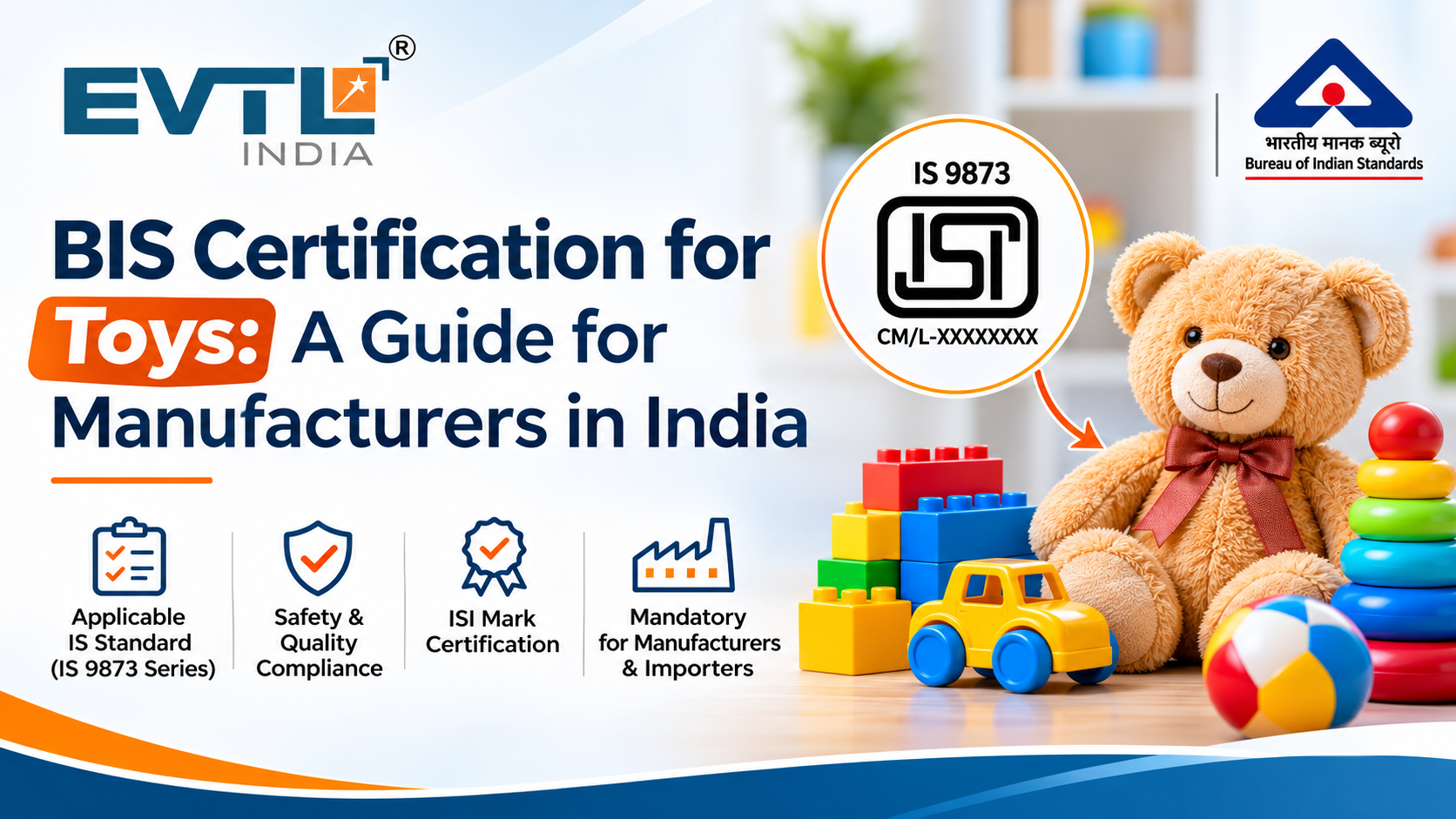
The toy industry in India is expanding with the introduction of innovative products, educational toys, electronic play items, and traditional toys. However, when products are designed for children, safety cannot be overlooked. Manufacturers must ensure that their toys meet the required quality and safety parameters before they are introduced into the Indian market.
BIS Certification for Toys is an important regulatory requirement for manufacturers dealing with toys covered under India's applicable Quality Control Order. It ensures that products comply with relevant Indian Standards and helps businesses establish credibility among customers, retailers, and distributors.
What Is BIS Certification for Toys?
BIS Certification for Toys is a product certification process through which the Bureau of Indian Standards evaluates whether toys comply with the applicable Indian Standards. The certification confirms that covered products meet prescribed safety and quality requirements.
After obtaining the required BIS licence, manufacturers can use the ISI Mark on approved products in accordance with the licence conditions. The ISI Mark Certification for Toys indicates that the product has been certified under the applicable BIS requirements.
Businesses often search for BIS Registration for Toys when looking for toy certification. However, for toys covered under the mandatory QCO, manufacturers generally need to follow the applicable BIS licensing and ISI Mark certification requirements.
Why Is BIS Certification Mandatory for Toys?
The Toys (Quality Control) Order, 2020 was introduced to improve the safety and quality of toys available in India. Toys intended for children may present risks if they contain unsafe materials, sharp edges, small detachable components, electrical hazards, or other defects.
Mandatory certification helps ensure that manufacturers follow the prescribed safety requirements. It also supports consumer protection and encourages manufacturers to maintain consistent product quality.
For businesses, obtaining a BIS licence is an important compliance requirement before selling toys covered under the order in the Indian market.
Indian Standards Applicable to Toys
The applicable Indian Standard depends on the type of toy and its functionality.
BIS Certification for Non-Electric Toys
Non-electric toys are products that do not require electrical power to perform their intended function. These may include dolls, puzzles, wooden toys, blocks, soft toys, toy figures, and other traditional play products.
Such toys are generally covered under the applicable parts of the IS 9873 series. The relevant requirements may address mechanical and physical safety, flammability, chemical properties, and other safety aspects.
BIS Certification for Electric Toys
Electric toys include products that operate using batteries or electrical power, such as electronic toys, interactive learning products, battery-operated vehicles, and certain remote-controlled toys.
These products are generally covered under IS 15644:2006, along with other applicable requirements depending on the product's design and features.
Manufacturers should identify the correct standard before proceeding with product testing or submitting their BIS application.
Types of Toys Covered Under BIS Certification
BIS certification requirements may apply to different types of toys, including:
-
Plastic toys and toy figures
-
Dolls and soft toys
-
Wooden toys
-
Educational and learning toys
-
Battery-operated toys
-
Electronic toys
-
Remote-controlled toys
-
Toy vehicles
-
Puzzles and board games
-
Building blocks and construction toys
-
Ride-on toys
-
Outdoor play equipment
The applicable requirements may vary according to the product category, construction, materials, and intended age group.
BIS Certification Process for Toys
Manufacturers generally need to complete the following steps to obtain a BIS licence:
Step 1: Identify the Applicable Standard
Determine whether the toy is electric or non-electric and identify the relevant Indian Standard based on the product's specifications and intended use.
Step 2: Prepare the Application and Documents
Compile manufacturing details, product specifications, factory information, quality-control records, and other supporting documents required for the application.
Step 3: Product Testing
Submit product samples for testing as per the applicable Indian Standard. Testing helps evaluate the toy against the relevant safety and quality parameters.
Step 4: Factory Inspection
BIS may inspect the manufacturing facility to evaluate production processes, quality-control arrangements, testing facilities, and the manufacturer's ability to maintain consistent product quality.
Step 5: Licence Grant
After the required evaluation is completed successfully, BIS may grant the licence, allowing the manufacturer to use the ISI Mark on approved products in accordance with the licence conditions.
Documents Required for BIS Certification for Toys
Manufacturers may need to arrange the following documents:
-
Factory registration or manufacturing licence
-
Manufacturing unit address proof
-
Product specifications and technical details
-
Manufacturing process flow chart
-
Details of machinery and production facilities
-
Testing equipment and calibration records
-
Quality-control procedures
-
Raw material and component details
-
Product labels and packaging information
-
Trademark-related documents, where applicable
-
Required declarations and application documents
The exact documentation may depend on the toy category, manufacturing unit, and applicable certification requirements.
Benefits of BIS Certification for Toy Manufacturers
Obtaining BIS Certification offers several benefits to manufacturers:
-
Helps meet mandatory regulatory requirements
-
Supports legal sale of covered toys in the Indian market
-
Builds confidence among customers and retailers
-
Demonstrates commitment to product safety
-
Helps improve quality-control practices
-
Strengthens brand credibility
-
Supports business opportunities in the Indian market
Why Choose EVTL India as Your BIS Certification Consultant?
The BIS certification process may involve technical documentation, product testing, factory inspection, and regulatory coordination. Manufacturers may require professional assistance to understand the applicable standards and manage the certification process effectively.
EVTL India provides consultancy support for BIS certification, including assistance with applicable standard identification, documentation, product testing coordination, factory inspection preparation, and certification-related guidance.
Working with an experienced BIS Certification Consultant can help manufacturers understand the requirements, prepare more effectively, and reduce avoidable delays during the certification process.
Frequently Asked Questions
Is BIS Certification mandatory for toys in India?
Yes, BIS certification is mandatory for toys covered under the Toys (Quality Control) Order, 2020 and applicable Indian Standards.
Which Indian Standard applies to non-electric toys?
Non-electric toys are generally covered under the applicable parts of the IS 9873 series, depending on the product and relevant safety requirements.
Which standard applies to electric toys?
Electric toys are generally covered under IS 15644:2006, along with other applicable standards or requirements depending on the product.
Can imported toys be sold in India without BIS certification?
Toys covered under mandatory BIS requirements must comply with the applicable certification requirements before being sold in India. Importers and foreign manufacturers should ensure compliance before placing products in the Indian market.
How can a BIS Certification Consultant help?
A BIS Certification Consultant can provide guidance regarding applicable standards, documentation, testing coordination, factory inspection preparation, and the certification process.
Conclusion
EVTL India is one of the leading BIS Consultant in India, helping manufacturers obtain their BIS licences hassle-free. BIS Certification for Toys is an essential requirement for manufacturers supplying toys covered under India's mandatory certification framework. Compliance helps businesses demonstrate that their products meet the prescribed safety and quality requirements while building trust in the marketplace.
Manufacturers should identify the applicable Indian Standard, prepare the required documentation, complete product testing, and ensure their manufacturing facility is ready for evaluation. With proper planning and professional guidance, the BIS certification process can be managed more efficiently.
 French
 English
 Arabic
 Spanish
 Portuguese
 Deutsch
 Turkish
 Dutch
 Italiano
 Russian
 Romaian
 Portuguese (Brazil)
 Greek