


Why E-commerce Websites Need More Than Basic SEO to Grow Organically
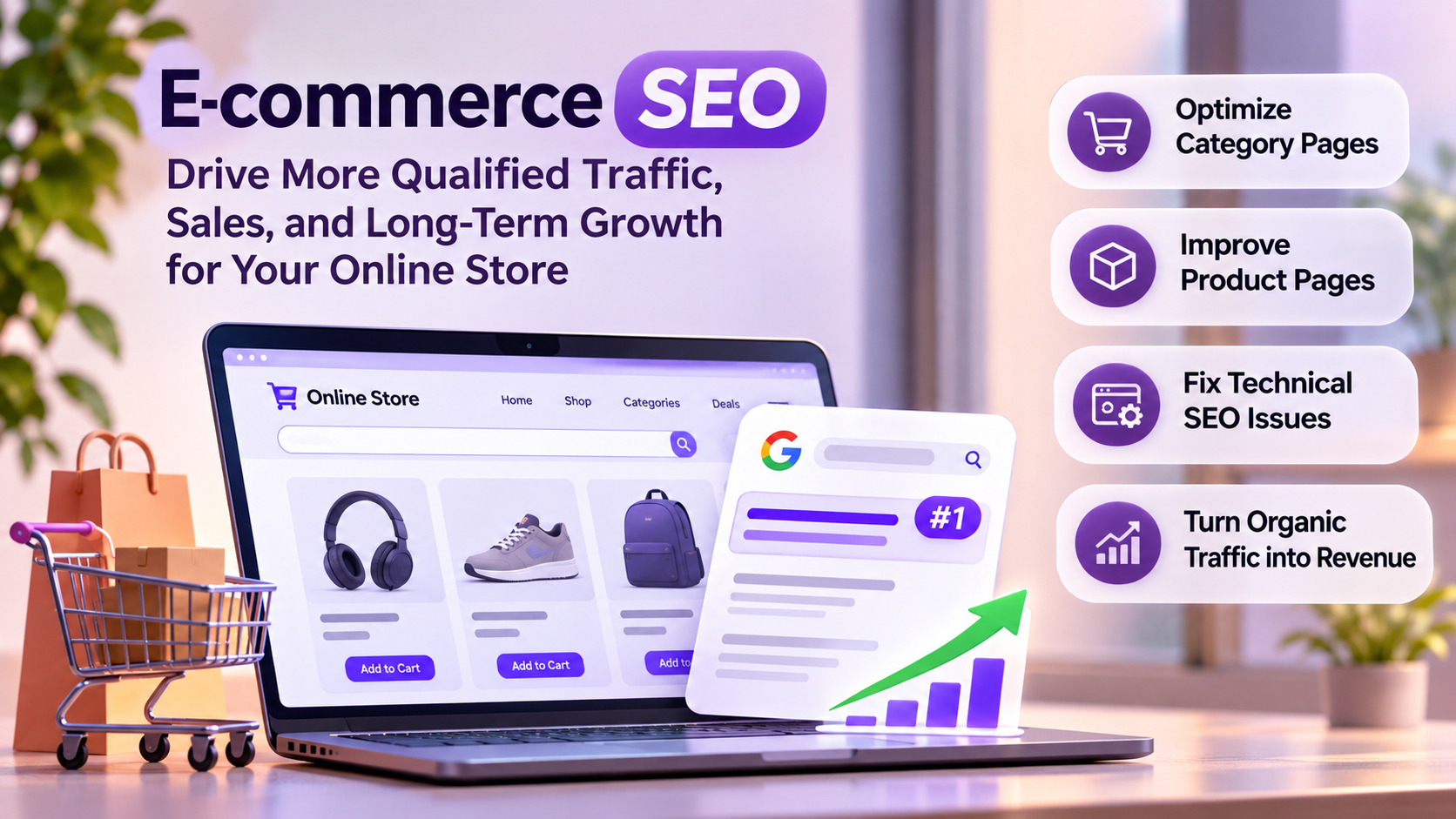
Running an online store involves more than adding products and waiting for customers to find them. As a catalogue grows, its SEO requirements become increasingly complicated. Hundreds or thousands of product pages, multiple category levels, filters, product variants, and changing inventory can create technical challenges that smaller websites rarely encounter.
A store may have excellent products and competitive prices but still struggle to attract organic traffic if search engines cannot efficiently discover and understand its important pages.
This is why e-commerce SEO needs a broader approach than simply optimizing product titles and adding keywords. Businesses must consider catalogue architecture, crawl efficiency, category relevance, product information, and the relationship between organic traffic and revenue.
For businesses dealing with these challenges, MoxSEO's E-commerce SEO Services focus on improving the technical and structural foundations of online stores.
1. Large Product Catalogues Create SEO Complexity
A small website may have a few important pages. An e-commerce website can contain thousands of URLs, each serving a different product, category, variant, or filter combination.
This creates an important question: Which pages should search engines discover and prioritize?
Not every URL generated by an online store deserves to appear in search results. Filter combinations, sorting parameters, and duplicate product paths can create unnecessary variations.
When these URLs are not managed properly, search engines may spend time crawling pages that offer little unique value.
A catalogue-focused SEO strategy begins by understanding how URLs are generated and deciding which pages deserve organic visibility.
2. Category Pages Need a Clear Purpose
Category pages are often among the most valuable pages on an online store.
A customer searching for a broad product category is usually looking for options rather than one specific product. A well-organized category page can help that customer explore relevant products while providing search engines with a clear understanding of the page's subject.
However, many online stores treat category pages as simple product grids.
A stronger category page should include:
- A descriptive and relevant heading.
- Useful introductory information.
- Logical subcategory links.
- Clear product organization.
- Relevant filters and sorting options.
- Helpful buying information where appropriate.
The goal is not to fill every category page with unnecessary text. It is to make the page genuinely useful while establishing its relevance to the intended search.
3. Faceted Navigation Needs Careful Management
Filters improve the shopping experience by helping customers narrow products according to price, size, colour, brand, availability, and other attributes.
But every filter combination can potentially create another URL.
For example, a clothing store might generate separate URLs for black shirts, medium-sized shirts, discounted shirts, and combinations of all three.
A large catalogue can generate an enormous number of these variations.
The challenge is deciding which filtered pages offer enough unique value to deserve indexing.
Some combinations may have meaningful search demand and deserve dedicated landing pages. Others should remain navigation tools without creating additional indexable pages.
Businesses should establish consistent rules for:
- Filter parameters.
- Sorting URLs.
- Canonical tags.
- Crawlable navigation paths.
- Indexation of valuable filtered pages.
This helps search engines focus on the pages that matter most.
4. Product Pages Need Useful and Original Information
Product pages are where visitors make purchasing decisions, so their content needs to do more than repeat a manufacturer's description.
When multiple retailers use identical product descriptions, it becomes difficult for individual stores to provide distinctive information.
A useful product page should answer questions about the product's specifications, materials, dimensions, compatibility, available variants, and practical benefits.
Other important elements include:
- Descriptive product titles.
- High-quality product images.
- Accurate image alt text.
- Clear availability information.
- Genuine customer reviews.
- Shipping and return details.
- Relevant related-product links.
The purpose is to help customers make informed decisions rather than simply increase the number of keywords on a page.
5. Product Schema Helps Search Engines Understand Catalogue Information
Structured data provides search engines with additional information about products.
For e-commerce websites, Product and Offer markup can describe details such as product names, prices, availability, brands, and identifiers.
Review information may also be included where it meets the relevant requirements.
However, structured data needs to match the information visible on the page. Incorrect or duplicated markup can create confusion instead of improving clarity.
Businesses should regularly validate important product templates, particularly when themes, plugins, or ecommerce applications generate structured data automatically.
Adding schema does not guarantee enhanced search appearances, but accurate implementation helps search engines interpret product information.
6. Out-of-Stock Products Need a Proper SEO Strategy
Inventory changes are a normal part of running an online store.
A product may become temporarily unavailable, permanently discontinued, or replaced by a newer version.
Deleting every unavailable product page can result in lost organic traffic and broken links. Redirecting every discontinued product to the homepage is not necessarily a better solution.
The appropriate approach depends on the product's availability, future plans, backlinks, search demand, and relevance of alternative products.
For example:
- Temporarily unavailable products may remain accessible with clear availability information.
- Discontinued products with relevant replacements may be redirected to those alternatives.
- Permanently removed products without suitable replacements may need an appropriate status response.
- Valuable product pages should be evaluated before being removed.
A defined inventory lifecycle strategy helps businesses manage these changes without making unnecessary SEO decisions.
7. Organic Traffic Should Connect to Business Performance
Getting more visitors is useful, but traffic alone does not explain whether an e-commerce SEO strategy is working.
A store may attract visitors through informational searches without generating meaningful purchases.
This is why businesses should look beyond rankings and total organic sessions.
Useful performance measurements include:
- Organic revenue by category.
- Organic traffic to important product pages.
- Non-branded search visibility.
- Indexed product and category pages.
- Organic conversion rates.
- Revenue from priority product groups.
Measuring performance at the category and product-group level helps businesses understand which areas contribute to commercial results.
How MoxSEO Approaches E-commerce SEO
MoxSEO's E-commerce SEO Services address the challenges associated with managing large online catalogues.
Its service approach covers catalogue diagnostics, category demand mapping, faceted navigation, product-page systems, product schema, internal discovery, inventory lifecycle management, and revenue measurement.
It also considers different ecommerce platforms, including Shopify, WooCommerce, Magento, and custom-built stores.
For businesses operating large catalogues or marketplaces, this broader approach can help identify technical problems and prioritize improvements according to search demand and commercial importance.
Explore MoxSEO's E-commerce SEO Services to learn more about its approach.
Final Thoughts
E-commerce SEO becomes more complicated as an online store grows. More products introduce more URLs, more category relationships, more inventory changes, and more opportunities for technical issues.
The answer isn't simply to publish more content or add more keywords. Businesses need to understand how their catalogue is organized, which pages deserve visibility, and how search engines discover important products.
A well-structured online store makes it easier for shoppers to find relevant products and gives search engines clearer signals about the pages that matter.
Ultimately, successful e-commerce SEO should connect better search visibility with a better shopping experience and measurable business performance.
 Turkish
 English
 Arabic
 French
 Spanish
 Portuguese
 Deutsch
 Dutch
 Italiano
 Russian
 Romaian
 Portuguese (Brazil)
 Greek