


What Is Intestinal Failure and When Does It Require a Small Bowel Transplant?
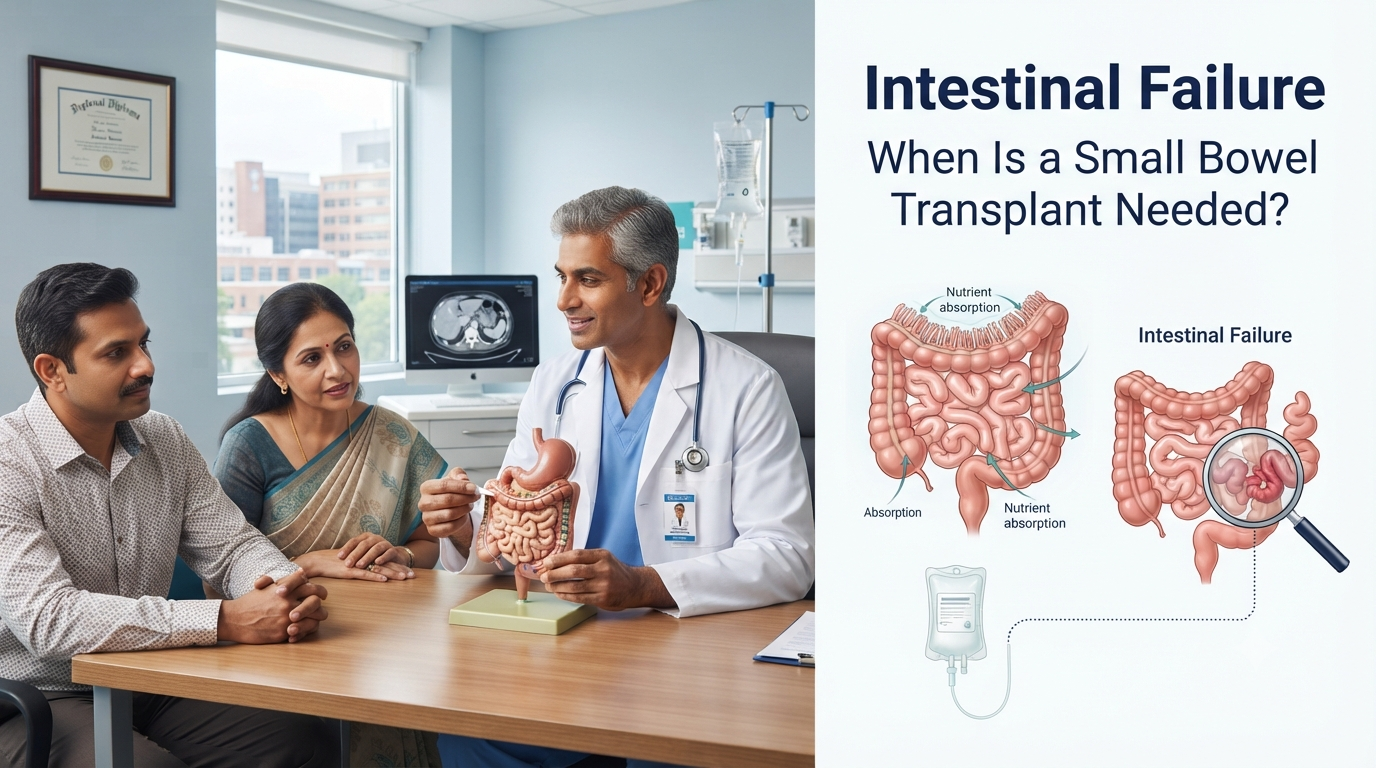
Intestinal failure occurs when the small intestine cannot absorb enough nutrients, water, and electrolytes to maintain health or support normal growth. According to the European Society for Clinical Nutrition and Metabolism (ESPEN), the condition requires intravenous supplementation because the gut cannot meet the body's needs through digestion and absorption alone.
Intestinal failure is different from intestinal insufficiency. In insufficiency, absorption is reduced, but the person can still maintain health without regular intravenous support.
What Causes Intestinal Failure?
Several conditions can damage the intestine or prevent it from working properly. Common causes include:
-
Short bowel syndrome: A large section of the small intestine is missing or has been removed, reducing the surface available for nutrient absorption.
-
Severe intestinal disease: Conditions affecting the intestinal lining can interfere with the absorption of nutrients and fluids.
-
Intestinal dysmotility: The bowel muscles or nerves do not move food forward effectively.
-
Repeated obstruction or complex fistulas: These problems can interrupt normal digestion, absorption, or movement of intestinal contents.
-
Congenital conditions: Some children are born with intestinal abnormalities that limit normal bowel function.
Intestinal failure may develop after surgery for trauma, bowel twisting, poor blood supply, or other serious abdominal conditions.
What Are the Signs and Complications?
Symptoms vary with the cause and severity. People may experience persistent diarrhoea, dehydration, weight loss, poor growth in children, abdominal discomfort, fatigue, or difficulty maintaining adequate nutrition.
Long-term intestinal failure can lead to electrolyte imbalances and malnutrition. Some patients need parenteral nutrition, which delivers nutrients through a vein. When a central venous catheter provides this support over time, complications can include bloodstream infections, blood clots, and liver problems related to intestinal failure or parenteral nutrition.
How Is Intestinal Failure Treated?
Treatment aims to improve absorption, maintain hydration, support nutrition, and manage the underlying condition. A specialist intestinal-failure team may recommend dietary changes, oral or tube feeding, medicines, and surgery where appropriate.
For chronic intestinal failure, home parenteral nutrition can provide essential fluids and nutrients when the intestine cannot absorb enough. ESPEN guidance recommends specialist assessment and intestinal rehabilitation to explore whether treatment can reduce or remove the need for intravenous support. Transplantation is not the first treatment for every patient.
When Does It Require a Small Bowel Transplant?
A small bowel transplant may be considered when intestinal failure becomes permanent or life-limiting and other treatment options cannot provide safe, sustainable support. The decision requires assessment by an experienced transplant and intestinal rehabilitation team.
Important reasons to assess transplant suitability include:
1. Serious Complications of Parenteral Nutrition
Progressive liver injury associated with intestinal failure, repeated catheter-related bloodstream infections, or loss of access to major veins because of blood clots may make long-term parenteral nutrition unsafe or difficult to continue.
2. Severe Dehydration or Metabolic Complications
Some patients continue to experience life-threatening fluid, electrolyte, or nutritional problems despite expert treatment. The transplant team evaluates the frequency, severity, and reversibility of these complications.
3. Irreversible Intestinal Disease
Extensive loss of the small intestine, severe intestinal dysmotility, or other irreversible conditions may leave the patient dependent on long-term intravenous support. Transplant assessment may be appropriate when rehabilitation cannot provide adequate intestinal function.
These factors do not automatically mean that transplantation is necessary. Specialists consider overall health, other organ function, expected benefit, and the risks of surgery and lifelong immunosuppressive medicines.
What Does a Small Bowel Transplant Involve?
A small bowel transplant replaces a diseased or non-functioning section of intestine with a donor intestine. Some patients need an isolated bowel transplant, while others may require a combined liver-intestine or multivisceral transplant, depending on the organs affected.
Before surgery, the team reviews medical history, nutritional status, infections, blood vessels, and other organ function. After transplantation, close monitoring helps detect rejection, infection, and surgical complications. Patients need lifelong follow-up and immunosuppressive medication to reduce the risk of rejection.
Exploring Small Intestine Transplant in India
People living with chronic intestinal failure may benefit from an early opinion at a centre experienced in intestinal rehabilitation and transplantation. During consultation, patients and families can discuss the cause of intestinal failure, available nutrition support, transplant eligibility, possible procedures, risks, and long-term care.
A small bowel transplant is a treatment for selected patients, not a routine solution for every absorption problem. Timely evaluation helps the care team identify the safest approach and plan treatment around each patient's needs.
 Turkish
 English
 Arabic
 French
 Spanish
 Portuguese
 Deutsch
 Dutch
 Italiano
 Russian
 Romaian
 Portuguese (Brazil)
 Greek