


B2B Lead Generation vs. Traditional Prospecting: Key Differences
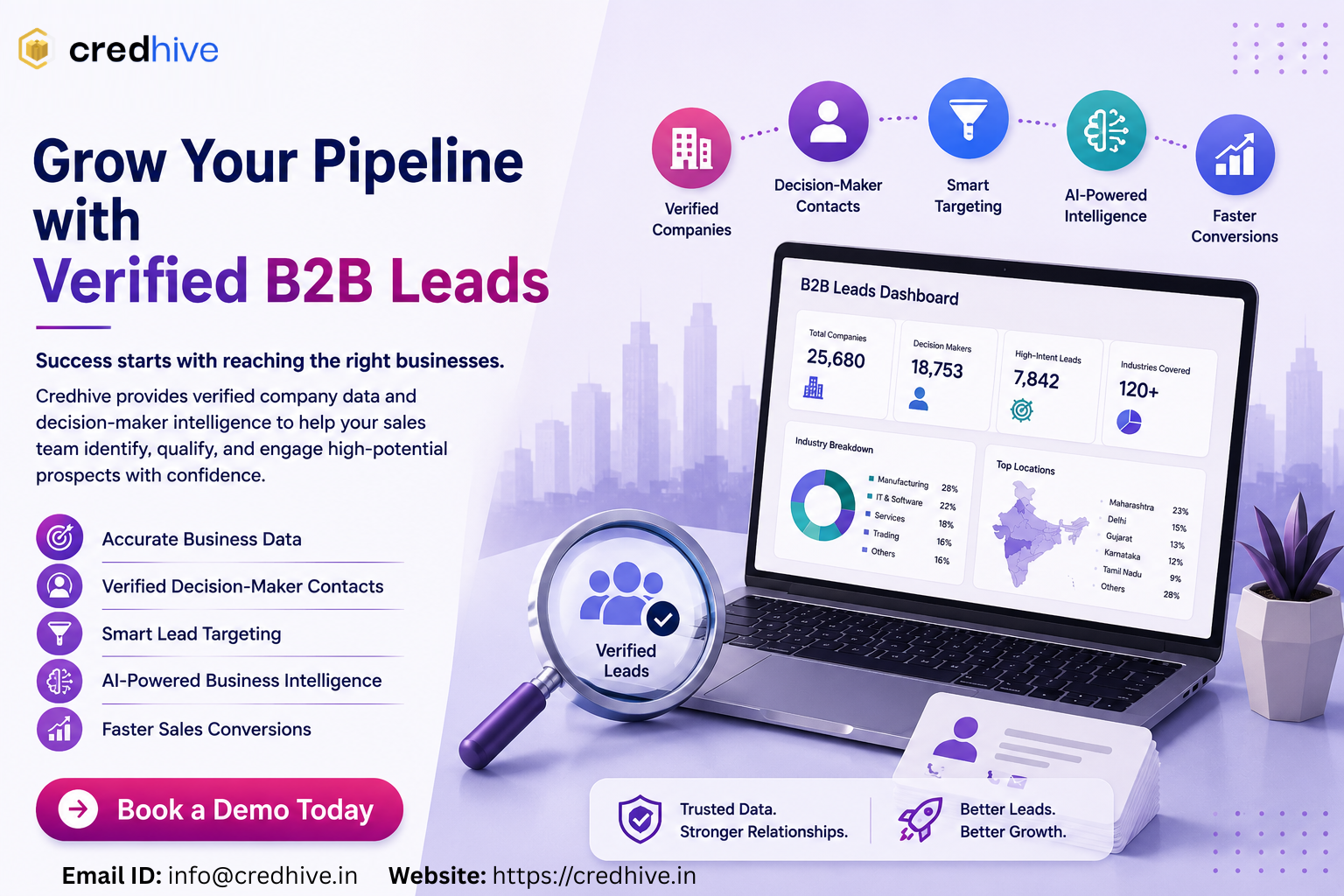
Generating business opportunities is an important part of building a successful B2B sales strategy. Businesses need to identify potential customers, understand their requirements, connect with decision-makers, and develop meaningful relationships. However, the methods used to find and approach potential customers have changed significantly over time.
Traditionally, businesses relied on referrals, cold calling, trade directories, networking events, and manual research to identify prospects. Today, B2B lead generation uses digital platforms, business databases, company intelligence, and data-driven targeting to discover relevant business opportunities.
Both approaches aim to attract potential customers and increase sales. However, they differ in how prospects are identified, how information is collected, and how sales teams engage with potential buyers.
In this guide, we explore the differences between B2B lead generation and traditional prospecting, their benefits, limitations, and how businesses can combine both approaches to improve sales performance.
What Is B2B Lead Generation?
B2B lead generation is the process of identifying and attracting businesses that may be interested in purchasing a company's products or services. It involves using digital channels, business databases, marketing campaigns, and company information to discover potential customers.
The primary objective is to build a relevant database of business prospects that sales teams can approach and convert into customers.
Common B2B lead generation methods include:
-
Business information databases
-
LinkedIn and professional networking platforms
-
Search engine optimisation (SEO)
-
Email marketing campaigns
-
Content marketing
-
Paid advertising
-
Industry-specific directories
-
Verified director and promoter databases
For example, an NBFC looking to expand its business lending operations can use a B2B leads database to identify registered companies, explore industry segments, and find relevant business decision-makers.
What Is Traditional Prospecting?
Traditional prospecting refers to manually identifying and approaching potential customers through conventional sales and networking methods.
It generally depends on personal interactions, referrals, direct communication, and offline research to find businesses that may require a particular product or service.
Common traditional prospecting methods include:
-
Cold calling
-
Personal referrals
-
Face-to-face meetings
-
Trade exhibitions and business events
-
Newspaper advertisements
-
Printed business directories
-
Door-to-door sales
-
Manual company research
For example, a sales representative may attend an industry exhibition, collect business cards, speak with company representatives, and follow up with interested prospects.
Although traditional prospecting can help establish personal relationships, it often requires significant time and effort to identify and qualify potential customers.
B2B Lead Generation vs. Traditional Prospecting: Key Differences
Both approaches help businesses identify potential customers, but their processes and capabilities differ.
|
Comparison Factor |
B2B Lead Generation |
Traditional Prospecting |
|---|---|---|
|
Lead Identification |
Uses digital platforms and business databases |
Relies on manual research and networking |
|
Data Collection |
Uses structured business information |
Collects information through direct interactions |
|
Market Reach |
Can target multiple industries and locations |
Often limited by personal networks and geography |
|
Decision-Maker Identification |
Uses director and promoter databases and professional platforms |
Depends on referrals and individual research |
|
Speed |
Supports faster prospect discovery |
Generally requires more manual effort |
|
Targeting |
Uses industry, location, and company-based filters |
Relies on personal knowledge and research |
|
Scalability |
Easier to expand through digital systems |
Requires additional sales resources |
|
Cost Structure |
Depends on tools, platforms, and campaigns |
Includes travel, networking, and sales expenses |
|
Performance Tracking |
Supports digital campaign and lead tracking |
Often relies on manual reporting |
|
Customer Interaction |
Can begin through email, calls, and digital channels |
Often starts with direct conversations and meetings |
7 Major Differences Between B2B Lead Generation and Traditional Prospecting
1. Lead Identification and Discovery
One of the biggest differences is how businesses discover potential customers.
B2B lead generation uses digital platforms, company databases, and business intelligence tools to identify organisations that match specific customer requirements.
Traditional prospecting depends more heavily on referrals, personal contacts, industry events, and manual research.
For instance, a company searching for manufacturing businesses in Maharashtra can use industry and location filters in a B2B database rather than manually researching individual companies.
2. Data Availability and Accuracy
B2B lead generation can provide structured company information that supports better prospect research. Depending on the provider, this may include company registration details, industry classifications, director information, business addresses, and available contact information.
Traditional prospecting usually gathers information through conversations, business cards, directories, and referrals.
While direct interactions can provide valuable insights, the information may not always be complete or consistently organised.
Businesses should evaluate the source, verification process, and freshness of any purchased or collected business data.
3. Target Audience Segmentation
Modern B2B lead generation makes it easier to segment prospects according to specific business requirements.
Sales teams can identify companies based on:
-
Industry and business category
-
Geographic location
-
Company registration type
-
Business size
-
Available financial indicators
-
Director and promoter information
Traditional prospecting generally depends on personal networks and manual filtering, making large-scale segmentation more challenging.
4. Time and Resource Requirements
Traditional prospecting often requires sales representatives to spend considerable time researching companies, making calls, attending events, and collecting business information.
B2B lead generation can simplify these activities by providing organised prospect information through digital platforms.
This allows sales teams to focus more on lead qualification, communication, and relationship development.
However, digital lead generation also requires investment in suitable platforms, marketing campaigns, and data management.
5. Market Reach and Scalability
Traditional prospecting is often influenced by the sales team's existing network, geographical reach, and available resources.
B2B lead generation provides opportunities to identify businesses across multiple industries, cities, and regions through digital channels and searchable databases.
For example, a business software provider can identify potential customers across Delhi, Mumbai, Bengaluru, Chennai, and other markets without depending entirely on local networking.
This makes digital lead generation particularly useful for businesses planning to expand their customer base.
6. Lead Tracking and Performance Measurement
Another important difference is the ability to track sales and marketing performance.
Digital lead generation tools can help organisations monitor campaign responses, lead sources, engagement, and conversion progress.
Traditional prospecting may rely on spreadsheets, call records, and manually maintained sales reports.
With appropriate CRM systems, businesses can also organise traditional prospecting activities and track follow-ups more effectively.
7. Personalisation and Customer Engagement
Traditional prospecting offers direct personal interaction, which can help sales representatives understand customer requirements and establish trust.
Digital B2B lead generation helps sales teams research potential customers before initiating communication.
By combining company profiles, industry information, and decision-maker details, businesses can prepare more relevant and personalised outreach.
The most effective approach is to use reliable business intelligence to identify prospects and meaningful conversations to develop relationships.
Benefits of B2B Lead Generation for Modern Businesses
As business markets become more competitive, organisations increasingly need structured ways to identify and engage potential customers.
Here are some important benefits of B2B lead generation.
Better Prospect Targeting
Businesses can identify companies that match their ideal customer profile instead of approaching a broad and unrelated audience.
Improved Sales Productivity
Access to organised business information reduces manual prospect research and helps sales teams concentrate on relevant opportunities.
Wider Business Reach
Digital lead generation makes it easier to discover potential customers across different industries, cities, and business segments.
Better Decision-Maker Identification
Director and promoter information can help organisations understand company leadership and identify relevant stakeholders for business communication.
Data-Driven Sales Planning
Business information and prospect insights help organisations plan targeted campaigns, prioritise prospects, and make informed sales decisions.
Is Traditional Prospecting Still Relevant?
Yes. Traditional prospecting continues to play an important role in B2B sales, particularly when businesses depend on personal relationships, referrals, and industry networking.
Direct communication allows sales representatives to understand customer challenges, address objections, demonstrate products, and build trust.
For example, enterprise software providers and financial service companies may benefit from attending industry events and arranging face-to-face meetings with prospective clients.
However, relying exclusively on traditional prospecting can limit market coverage and increase the time required to identify new opportunities.
Combining traditional methods with digital lead generation can help businesses improve both prospect discovery and customer engagement.
How to Choose the Right B2B Lead Generation Approach
The right approach depends on your business model, target audience, sales objectives, and available resources.
Consider the following factors before selecting a prospecting strategy:
|
Business Requirement |
Recommended Approach |
|---|---|
|
Finding companies across multiple industries |
Digital B2B lead generation |
|
Identifying directors and promoters |
Business intelligence databases |
|
Building personal business relationships |
Traditional networking |
|
Expanding into new geographic markets |
Digital lead generation |
|
Generating referral-based opportunities |
Traditional prospecting |
|
Conducting targeted company research |
Business information platforms |
|
Managing long-term enterprise relationships |
Combination of both approaches |
For most organisations, a combined strategy offers greater flexibility. Digital tools can support prospect identification, while traditional sales activities help convert relevant prospects into long-term customers.
How Credhive Supports Smarter B2B Lead Generation
Identifying the right business prospects requires more than collecting company names and contact details. Businesses need relevant company information and decision-maker intelligence to make prospecting more effective.
Credhive helps organisations discover potential business opportunities through its B2B Business Leads and business intelligence solutions.
The platform supports business discovery with access to structured company information, director and promoter details, and relevant business insights.
Key capabilities include:
-
Business Information: Explore company profiles and available registration details to understand potential prospects.
-
Director and Promoter Intelligence: Identify individuals associated with registered companies.
-
Industry-Based Discovery: Find potential business prospects across relevant sectors.
-
Company Insights: Access available financial, compliance, and corporate information for better business understanding.
-
Targeted Prospecting: Use business information to identify companies that align with specific sales requirements.
Whether you are a financial institution, NBFC, fintech company, service provider, or enterprise, Credhive helps transform business data into actionable intelligence for more informed B2B prospecting.
Explore Credhive to discover business intelligence and B2B lead solutions.
Conclusion
B2B lead generation and traditional prospecting both play valuable roles in business development, but they differ in their approach to identifying and engaging potential customers.
Traditional prospecting focuses on personal relationships, referrals, and direct interactions, while B2B lead generation uses digital platforms, structured business databases, and data-driven targeting to discover relevant prospects.
For modern businesses, combining both approaches can create a more effective sales strategy. Using reliable business information to identify potential customers and traditional sales methods to build relationships can help organisations improve prospecting efficiency, expand market reach, and develop stronger sales pipelines.
Frequently Asked Questions (FAQs)
1. What is the main difference between B2B lead generation and traditional prospecting?
B2B lead generation uses digital platforms, business databases, and targeted marketing to identify potential customers. Traditional prospecting relies on manual research, referrals, cold calling, and face-to-face networking.
2. Is B2B lead generation better than traditional prospecting?
B2B lead generation can improve prospect discovery, targeting, and scalability. However, traditional prospecting remains valuable for personal communication and relationship building. Combining both methods can deliver a balanced sales approach.
3. What are the most common B2B lead generation methods?
Common methods include SEO, content marketing, email campaigns, LinkedIn outreach, paid advertising, business directories, and verified B2B leads databases.
4. How does a B2B leads database help sales teams?
A B2B leads database helps sales teams discover relevant companies, identify directors and promoters, segment prospects, and organise targeted outreach activities.
5. Can businesses use traditional prospecting and digital lead generation together?
Yes. Businesses can use digital platforms to identify and research potential customers and traditional methods such as meetings, calls, and networking to establish relationships and develop sales opportunities.
 Deutsch
 English
 Arabic
 French
 Spanish
 Portuguese
 Turkish
 Dutch
 Italiano
 Russian
 Romaian
 Portuguese (Brazil)
 Greek