


World Marathon Majors 2026 Review: Sabastian Sawe's Sub-Two-Hour Miracle in London, Tigst Assefa's Double and a Season of Records Across Seven Cities
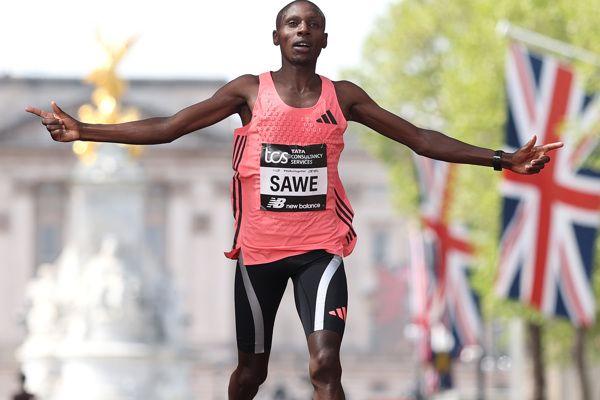
Across seven races, from Tokyo in March to New York in November, the series produced the first official sub-two-hour marathon in history, a new women's-only world record, course records in Tokyo, Boston, and Sydney, and a debut winner in New York who had never run a marathon before. Fourteen titles were decided, thirteen of them won by Kenyan and Ethiopian athletes, and by the time the season closed in Central Park on 1 November, the record books had been rewritten so thoroughly that the sport would be measuring itself against 2026 for years to come.
The headline, of course, belongs to Sabastian Sawe. The Kenyan's 1:59:30 at the London Marathon on 26 April made him the first man to run a marathon in under two hours in official race conditions, shaving 65 seconds off Kelvin Kiptum's world record of 2:00:35 from Chicago 2023. Behind him, Ethiopia's Yomif Kejelcha also broke two hours with 1:59:41 on his marathon debut, and Uganda's Jacob Kiplimo ran 2:00:28, inside the old record. For fans who followed the season through the year, whether on the roadside or with a Kingexchange ID online checking the outright markets, London was the day the marathon changed forever.
Tokyo and Boston: How the 2026 Marathon Majors Season Began
The season opened in Tokyo on 1 March with two outstanding races. Ethiopia's Tadese Takele won the men's race in 2:03:37, holding off Kenya's Geoffrey Toroitich, who finished in the same time, with Alexander Mutiso third in 2:03:38, a podium separated by a single second. In the women's race, Kenya's Brigid Kosgei, the former world record holder, won in 2:14:29 to set a new course record, ahead of Ethiopia's Bertukan Welde in 2:16:36 and Hawi Feysa in 2:17:39. Tokyo set the tone for the year: deep fields, fast times, and finishes decided by seconds.
Boston, on 20 April, delivered a Kenyan double and two successful title defenses. John Korir won the men's race in 2:01:52, a new course record, ahead of Tanzania's Alphonce Simbu in 2:02:47 and Benson Kipruto in 2:02:50. Sharon Lokedi won the women's race in 2:18:51, leading a Kenyan clean sweep of the podium with Loice Chemnung second in 2:19:35 and Mary Ngugi-Cooper third in 2:20:07. The 130th edition of the Boston Marathon, run as always on Patriots' Day, confirmed the city's place as the toughest test of the series: the Newton Hills punish anyone who starts too fast, and both winners were rewarded for patience. Korir's course record, on a course famous for resisting fast times, was one of the outstanding runs of the season.
London 2026: The Day Sabastian Sawe Broke the Two-Hour Barrier
The 46th London Marathon, on 26 April, was the most remarkable marathon ever run. Sawe, the defending champion after his 2025 win in 2:02:27, ran 1:59:30 to become the first man to break two hours in an official race, under standard World Athletics conditions, with no rotating pacemakers and no closed course. The distinction matters: Eliud Kipchoge's 1:59:40 in the INEOS 1:59 Challenge in 2019 was a staged exhibition, not a race, while Sawe's run was achieved in open competition against the strongest marathon field ever assembled. He beat the previous world record by 65 seconds, and he did it on a course that had never produced a time close to it, a run that rewarded everyone who had backed him with a Kingexchange ID online.
The depth of the race was almost as astonishing as the winning time. Kejelcha, the Ethiopian track star running his first marathon, finished second in 1:59:41, also inside two hours, while Kiplimo took third in 2:00:28, himself inside Kiptum's old record. The top three men ran the three fastest marathons in history in a single race, and the sport's most famous barrier fell not once but twice in the space of eleven seconds. For marathon running, it was a moon-landing moment: a line that had stood for as long as anyone could remember was crossed and crossed by two men on the same morning.
The women's race was just as historic. Ethiopia's Tigst Assefa defended her title in 2:15:41, breaking her own women's-only world record of 2:15:50, set on the same course twelve months earlier. Behind her, Hellen Obiri ran 2:15:53 and Joyciline Jepkosgei 2:15:55, making it the first women's marathon in history in which three athletes ran under 2:16. Assefa, who had also held the overall women's world record from her 2:11:53 in Berlin in 2023, confirmed her status as the finest women's marathon runner of her generation, and her London win was the first half of a double that would define the season.
Why London 2026 Changed Marathon Running for Fans With a Cricbet Betting ID
The significance of London 2026 goes beyond the record books. The sub-two-hour barrier had been the sport's most famous frontier since the first serious attempts to break it, and its fall changed the way every marathon is understood. For followers of the sport, the race also changed the betting landscape: outright markets for the autumn marathons moved sharply after London, with Sawe installed as a short favourite wherever he ran next, and the winning-time markets, always popular with a cricbet betting ID, took on a new dimension as punters asked whether the two-hour barrier could fall again in Berlin or Chicago.
Sydney and Berlin: New Courses, New Records, and Assefa's Double
The series resumed in Sydney on 30 August, where Ethiopia's Addisu Gobena broke the course record to win the men's race in 2:04:42, ahead of compatriot Chimdessa Gudeta in 2:04:46 and Lesotho's Tebello Ramakongoana in 2:04:57. In the women's race, Kenya's Peres Jepchirchir, the Olympic marathon champion, won in 2:18:31, the second-fastest time ever run at the Sydney Marathon, to claim her fourth World Marathon Major title. Sydney, the newest addition to the Majors, continued to grow in stature, and its hilly course produced a worthy test for the world's best and for punters following the race with a Kingexchange ID online.
Berlin, on 27 September, delivered the fastest women's marathon of the series and one of the fastest ever run. Assefa won the women's race in 2:11:04, a course record and the third-fastest women's marathon in history, completing a London-Berlin double that marked her out as the outstanding women's runner of 2026. Her compatriots Bedatu Hirpa and Dera Dida completed an Ethiopian clean sweep of the podium in 2:16:53 and 2:16:55. In the men's race, Ethiopia's Guye Adola won in 2:02:50, ahead of Dida Deriba in 2:03:19 and Tanzania's Gabriel Geay in 2:03:59.
Chicago and New York: Kipruto's Breakthrough and Almgren's Debut Triumph
Chicago, on 11 October, produced two outstanding winners. Kenya's Amos Kipruto won the men's race in a personal best of 2:01:09, the fourth-fastest marathon of the year, ahead of Takele in 2:02:56 and Milkesa Mengesha in 2:03:46. In the women's race, Ethiopia's Hawi Feysa successfully defended her title in 2:13:33, with Lokedi second in 2:14:07 and Kosgei third in 2:14:55. Chicago's flat, fast course has always produced quick times, and 2026 was no exception: five of the six podium finishers across the two races ran personal bests or season's bests, and the depth of the fields confirmed the race's status as one of the great autumn marathons.
The season closed in New York on 1 November with one of the most remarkable results in the history of the sport. Sweden's Andreas Almgren, running his first ever marathon, won the men's race in 2:06:01, becoming the first Swede to win a World Marathon Major, the first European winner of a Major since Paula Radcliffe in 2008, and the first runner to win a Major on debut in 16 years. Almgren, the 2025 World 10,000 metres bronze medallist and the winner of the World Half Marathon Championships in Copenhagen six weeks earlier, pulled away from Italy's Yemaneberhan Crippa, second in 2:06:14, with Lesotho's Kamohelo Mofolo third in 2:06:26 and the defending champion Benson Kipruto fourth in 2:06:27.
The women's race in New York was decided by a sprint finish. Kenya's Sheila Chepkirui, 35, won her second New York title in three years in 2:24:36, holding off a surging Jess McClain of the United States, who finished second in 2:24:42 after passing the two-time champion Hellen Obiri, third in 2:24:43, in the final strides. The top three women were separated by just seven seconds, and McClain's second place was the first podium for an American man or woman in New York since Shalane Flanagan finished third in 2018. In the wheelchair races, Switzerland's Marcel Hug won his eighth New York title by one second over Daniel Romanchuk, completing a clean sweep of the original Majors, while Catherine Debrunner won her second title, three weeks after setting a world record in Chicago.
Betting on the Marathon Majors: Markets, Times, and In-Play Angles With a Cricbet Betting ID
The outright winner markets are the most popular, and in 2026 they rewarded those who looked beyond the favorites: Almgren's debut win in New York was available at long odds before the race, while Gobena's course-record win in Sydney and Adola's victory in Berlin both rewarded backers who had studied the form. Head-to-head markets between the leading contenders are also popular, particularly in races like London, where the field is deep, and the winning-time markets, where punters bet on whether the winner will beat a set time, were more interesting than ever after Sawe's sub-two-hour run, and they were among the busiest markets for anyone betting with a Kingexchange ID online.
The in-play side of marathon betting is different from most sports. A marathon takes more than two hours, and the live odds move slowly through the early miles before shifting rapidly in the final 10 kilometres, when the leading group breaks up and the winner emerges. For anyone following the Majors with a cricbet betting ID, the key lessons of 2026 are the same as in any sport: study the course, check the weather, look at recent form over the half marathon as well as the marathon, and never bet more than you can afford to lose.
Course Records, Weather and Pacemakers: What to Check Before a Marathon
Three factors shape every marathon result. The course profile matters most: flat courses like Berlin and Chicago produce fast times, while hilly courses like Boston and New York reward strength over speed, which is why winning times in New York are typically four or five minutes slower than in Berlin. And the pacemaking strategy, whether the race is set up for a record attempt or a tactical battle, determines how the race unfolds. In London, the pacemakers set a pace that made history possible; in New York, the absence of pacemakers and the difficulty of the course produced a tactical race decided by a sprint
The 2026 Season in Numbers: Kenya's Seven Wins and the Year the Marathon Changed
The final tally of the 2026 season underlines East Africa's dominance of the marathon. Kenyan athletes won seven of the fourteen titles: Kosgei in Tokyo, Korir and Lokedi in Boston, Sawe in London, Jepchirchir in Sydney, Kipruto in Chicago and Chepkirui in New York. Ethiopian athletes won six: Takele in Tokyo, Gobena in Sydney, Adola in Berlin, Assefa twice in London and Berlin, and Feysa in Chicago. Almgren's win in New York was the only title won by an athlete from outside those two countries, and it was the first European victory in the series for eighteen years
The numbers behind the season are just as striking. Nine of the fourteen winners wore adidas, with the brand claiming 21 of the 42 podium places, while Nike won three titles. The New York Marathon attracted 61,062 finishers in the 50th year of its five-borough route, confirming its status as the largest marathon in the world. Course records fell in Tokyo, Boston and Sydney, world records fell in London, and the fastest men's and women's times of the year were both run in the Majors. It was, by any measure, the greatest season in the history of the series.
Looking ahead to 2027, the questions are tantalising. For fans who followed the 2026 season with a Kingexchange ID online, the wait for the new season will feel long, but the memories of 2026, Sawe's 1:59:30, Assefa's double, Almgren's debut, will last far longer. The marathon changed in 2026, and it will never be quite the same again.
Noms d’utilisateur réservés
 French
 English
 Arabic
 Spanish
 Portuguese
 Deutsch
 Turkish
 Dutch
 Italiano
 Russian
 Romaian
 Portuguese (Brazil)
 Greek