


How Play-Based Learning Games Support Cognitive Development in Early Childhood
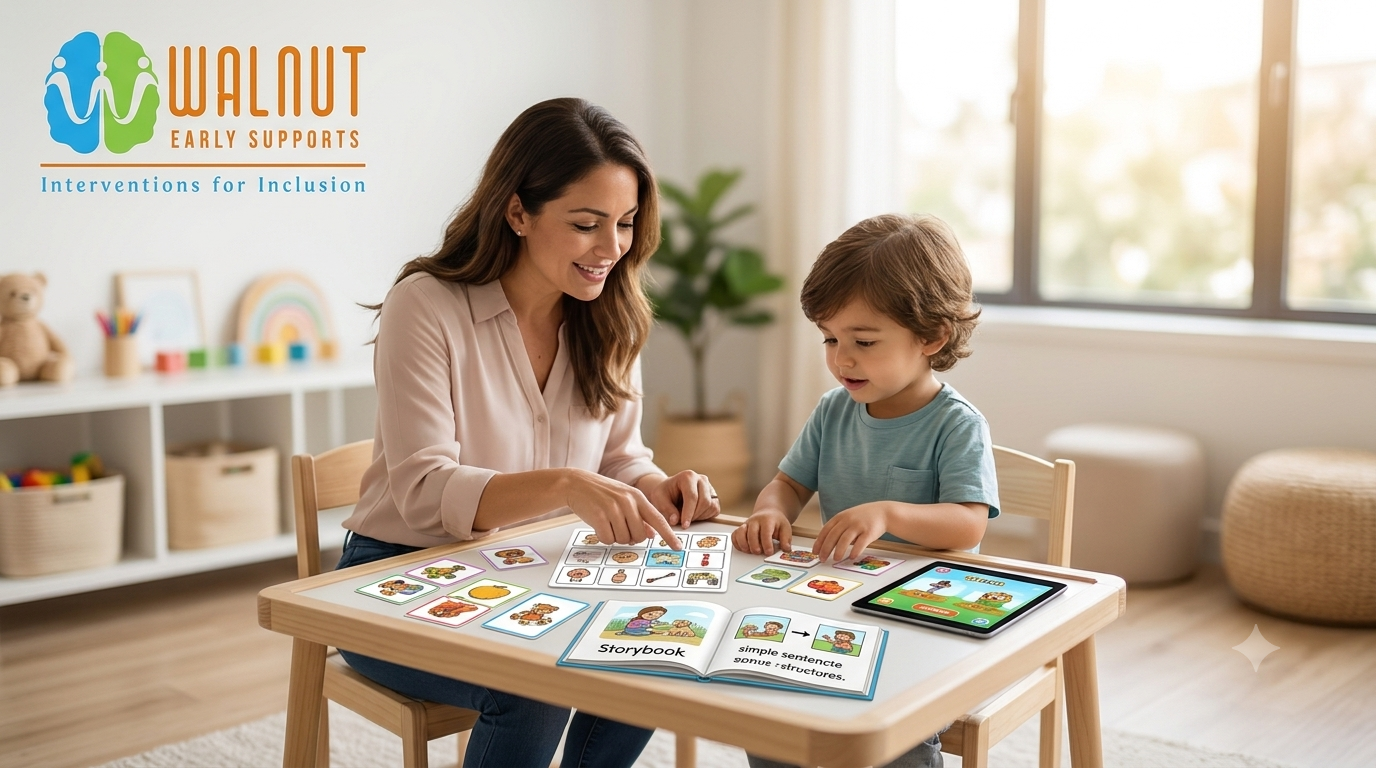
Early childhood is an important stage of learning and development. During these years, children begin to understand the world around them by exploring, observing, asking questions and interacting with others. Simple activities such as building blocks, solving puzzles, matching pictures and sorting objects can help them develop essential thinking skills.
Play is one of the most natural ways young children learn. It gives them opportunities to experiment, make decisions, solve small problems and discover new ideas. When learning activities are enjoyable and suited to their developmental level, children are more likely to participate and explore independently.
Games for Cognitive Development can make these experiences more meaningful by encouraging children to practise memory, attention, reasoning and problem-solving through everyday play.
Let's understand how play-based learning supports cognitive development during early childhood and how parents, educators and speech-language therapists can use it effectively.
What Is Play-Based Learning?
Play-based learning is an approach that uses enjoyable activities to help children develop new skills and understand concepts. Instead of relying only on direct instruction, children learn by participating, exploring and interacting with different materials.
For example, when a child builds a tower using blocks, they learn about shapes, sizes, balance and spatial relationships. Similarly, arranging picture cards in the correct order encourages them to observe details and understand sequences.
Play-based learning can include:
-
Building blocks and construction activities.
-
Picture matching and memory games.
-
Sorting objects by colour, shape or size.
-
Storytelling and sequencing activities.
-
Simple puzzles and problem-solving challenges.
-
Interactive digital learning activities.
These experiences support different areas of development while allowing children to learn at their own pace.
How Play-Based Learning Supports Cognitive Development
Cognitive development involves the mental processes children use to understand information, remember experiences, solve problems and make decisions. Play provides regular opportunities to practise these abilities in familiar and enjoyable situations.
Here are some important ways play-based activities support cognitive growth.
1. Strengthens Memory and Recall
Memory helps children remember information, recognise familiar objects and follow everyday instructions. It also supports learning new words, understanding stories and completing classroom activities.
Activities such as picture matching, remembering object locations and repeating sequences encourage children to recall information.
For example, a child playing a memory card game needs to remember where different pictures appeared to find matching pairs. Such activities provide opportunities to practise visual memory and recall.
Parents can also introduce simple activities at home, such as asking children to remember three objects placed on a table and identify them after a short pause.
2. Improves Attention and Concentration
Young children are naturally curious, but staying focused on one activity can sometimes be challenging. Play-based activities offer interesting ways to practise attention without making learning feel like a task.
Finding hidden objects, identifying differences between pictures and completing simple puzzles encourage children to look carefully and focus on specific details.
Short activities with clear instructions are particularly useful for introducing attention-based learning. As children become comfortable, parents and educators can gradually increase the activity's difficulty.
3. Encourages Problem-Solving Skills
Problem-solving begins when children try to understand a challenge and find a suitable solution.
Building puzzles, arranging blocks and completing sorting activities encourage children to experiment with different approaches.
For instance, when a puzzle piece does not fit, children may rotate it, compare its shape with other pieces or try a different position. These small experiences encourage independent thinking and persistence.
The aim is not always to find the correct answer immediately but to give children opportunities to think, experiment and learn from their attempts.
4. Develops Logical Thinking and Reasoning
Logical thinking helps children recognise patterns, understand relationships and make connections between different objects or ideas.
Activities involving colours, shapes, numbers and sequences can support early reasoning skills.
For example, children may be asked to arrange objects from smallest to largest or identify which picture comes next in a sequence. These activities encourage them to observe carefully, compare information and make decisions.
With regular opportunities to practise, children can begin applying these thinking skills to everyday situations.
5. Supports Language and Communication Development
Cognitive and language development are closely connected. Children use thinking skills to understand instructions, remember words, organise ideas and communicate their needs.
Play-based activities create natural opportunities for conversation and interaction.
During a picture-matching game, an adult can ask questions such as:
-
What can you see in this picture?
-
Which two pictures are the same?
-
What do you think will happen next?
-
Can you tell me why you chose this answer?
These questions encourage children to listen, understand, describe and express their thoughts.
Speech-language therapists can also use play activities to combine language goals with attention, memory and reasoning practice.
Types of Cognitive Games for Early Childhood
Choosing suitable activities helps children participate confidently while practising different thinking skills. Here are some activities parents and educators can introduce:
-
Memory matching: Helps children remember pictures and identify matching pairs.
-
Sorting activities: Encourages classification by colour, shape, size or category.
-
Simple puzzles: Develops visual reasoning and problem-solving.
-
Sequencing games: Helps children understand order and relationships between events.
-
Pattern activities: Encourages logical thinking and visual recognition.
-
Picture identification: Supports observation, vocabulary and comprehension.
These cognitive games can be adapted according to a child's age, interests and abilities. Younger children may benefit from simple activities with fewer choices, while older children can explore more challenging tasks.
The Role of Digital Games in Early Learning
Technology has introduced new ways to make learning interactive. Digital activities can combine pictures, sounds, instructions and engaging challenges to encourage children's participation.
Well-designed cognitive gaming activities can provide opportunities to practise memory, attention, visual recognition and reasoning. They may also offer different difficulty levels, allowing activities to be adjusted according to a child's learning needs.
However, digital activities should complement rather than replace hands-on play, outdoor exploration and social interaction. Parents and educators should select age-appropriate content and provide guidance during screen-based learning.
How Parents and Therapists Can Make Play More Meaningful
Children benefit most when activities match their current abilities and developmental needs. Parents and professionals can support learning by following a few simple practices:
-
Start with activities the child can understand and complete.
-
Give short and clear instructions.
-
Allow children enough time to explore and find answers independently.
-
Encourage questions and conversations during play.
-
Appreciate effort instead of focusing only on correct answers.
-
Introduce new challenges gradually as the child becomes more confident.
Parents and therapists can also explore appropriate child development therapy resources to find structured activities for different learning goals.
Conclusion
Play is an important part of early childhood because it gives children opportunities to explore, experiment and understand the world around them. From remembering pictures to solving puzzles, everyday activities can encourage the development of essential thinking skills.
Games for Cognitive Development make learning enjoyable by combining fun with opportunities to practise memory, attention, reasoning and problem-solving. When parents, educators and speech-language therapists choose activities that match a child's abilities, play can become a valuable part of the learning process.
Every child develops at a different pace. Providing encouragement, meaningful interactions and regular opportunities to explore can help children build confidence and develop skills that support future learning.
 Turkish
 English
 Arabic
 French
 Spanish
 Portuguese
 Deutsch
 Dutch
 Italiano
 Russian
 Romaian
 Portuguese (Brazil)
 Greek