


Glaucoma Treatment in Delhi: Symptoms, Types, Tests and Care (2026 Guide)
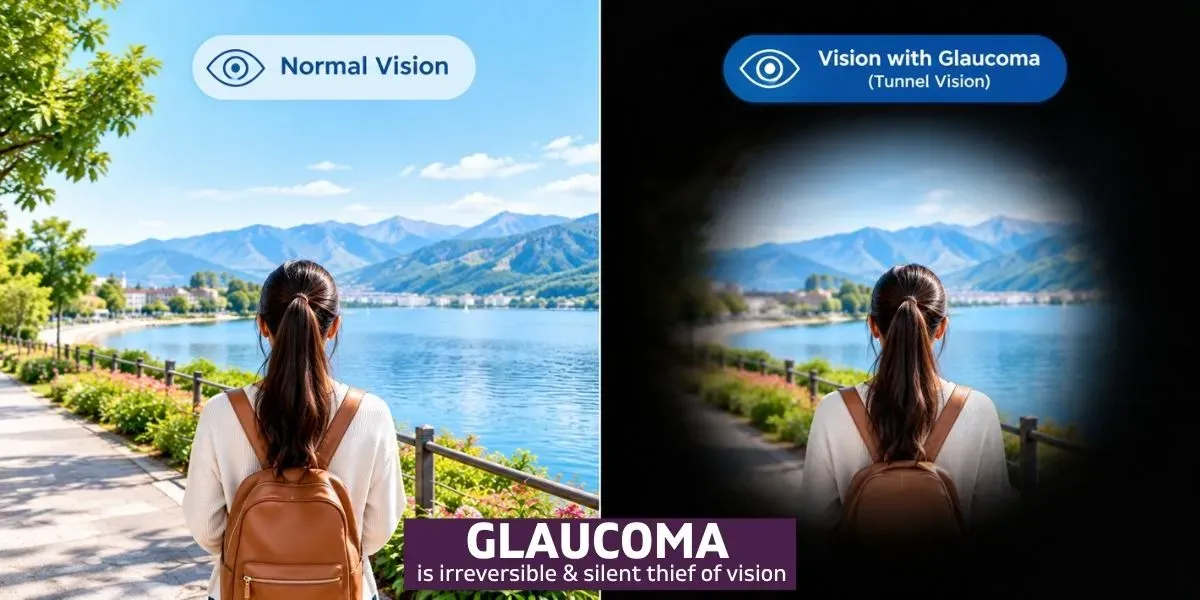
Glaucoma is often called the “silent thief of sight”, and for good reason. It usually causes no pain and no obvious symptoms in the early stages, yet it can slowly damage the optic nerve. Vision lost to glaucoma cannot be recovered, so early detection and consistent treatment matter a great deal. This guide explains what glaucoma is, how it’s diagnosed, and the treatment options available in Delhi.
What Is Glaucoma?
Glaucoma (known in Hindi as Kala Motiya) is a group of eye diseases that damage the optic nerve, the bundle of nerve fibres that carries visual information from your eye to your brain. It most often happens when fluid inside the eye doesn’t drain properly, which raises the eye’s internal pressure (intraocular pressure, or IOP).
Vision loss typically starts at the outer edges of your visual field and moves inward. Your central vision can stay sharp until the disease is advanced, which is why many people don’t notice a problem until significant damage has occurred.
Treatment can’t restore vision that’s already lost. It can stop or slow further damage and protect the sight you still have.
Symptoms and Warning Signs
Most people notice nothing in the early stages. When symptoms do appear, they can include:
- Rainbow-coloured halos around lights, especially at night
- Frequent changes in your glasses power
- Loss of side (peripheral) vision or a “tunnel vision” feeling
- Sudden blurry vision in low light
- Persistent eye pain, headaches or a feeling of pressure in the eyes
Seek emergency care if you have sudden severe eye pain with blurred vision, redness, headache, nausea or vomiting. These can signal acute angle-closure glaucoma, which needs immediate treatment.
Who Is at Higher Risk?
You may be at higher risk if you:
- are over 40 (risk rises further after 60)
- have a parent or sibling with glaucoma
- have diabetes, high blood pressure or thyroid disease
- use steroids long term, as tablets, drops or creams
- have thin corneas, high myopia or a past eye injury
Types of Glaucoma
Knowing your type decides your treatment plan.
- Open-angle glaucoma: the most common type. The drainage angle looks normal but becomes less efficient over years. It is painless.
- Angle-closure glaucoma: the drainage angle becomes blocked and pressure spikes quickly. It is an emergency.
- Normal-tension glaucoma: optic nerve damage occurs even with normal pressure readings, often linked to poor blood flow to the nerve.
- Secondary glaucoma: caused by another condition, such as diabetes, eye injury, uveitis or steroid use.
- Congenital glaucoma: rare, and present from birth. Early surgery is vital to save the child’s vision.
How Is Glaucoma Diagnosed?
A proper glaucoma workup goes well beyond a basic vision check. It usually includes:
- Tonometry: measures eye pressure. See how applanation tonometry works.
- Gonioscopy: examines the drainage angle to tell open-angle from angle-closure glaucoma.
- Pachymetry: measures corneal thickness, which affects how pressure readings are interpreted. Read about the pachymetry test.
- Optic nerve evaluation and OCT: a scan that measures nerve fibre thickness and can detect damage early. Learn about OCT eye tests.
- Perimetry: maps your central and peripheral vision. See the visual field test.
- History and risk review: family history, diabetes, blood pressure and steroid use.
Glaucoma Treatment Options
The right option depends on your type of glaucoma, how advanced it is, and how your eye pressure responds.
Medication and laser (non-surgical)
- Eye drops and oral medication: usually the first-line treatment. They lower pressure by reducing fluid production or improving drainage. They must be used exactly as prescribed, even when you feel fine.
- Selective Laser Trabeculoplasty (SLT): a quick outpatient laser that improves drainage. Many patients are able to reduce their drop dependence.
- Laser Peripheral Iridotomy (LPI): creates a tiny opening in the iris to relieve or prevent angle-closure attacks.
Surgery
- MIGS (Minimally Invasive Glaucoma Surgery): microscopic devices improve drainage with less trauma and faster recovery, and are often combined with cataract surgery.
- Trabeculectomy: a filtering surgery that creates a new drainage channel. It is highly effective at lowering pressure long term.
- Glaucoma drainage device (shunt/AGV): a small tube implant, typically used for complex or previously operated cases.
Living With Glaucoma: What to Be Careful About
- Never skip your drops, even if you have no symptoms. Treatment is lifelong.
- Avoid inverted yoga poses such as Shirshasana, which can temporarily raise eye pressure. Pranayam and meditation are safe and helpful.
- Sip fluids through the day instead of gulping large amounts at once.
- Avoid smoking, which is linked to reduced blood flow to the optic nerve.
- Keep every follow-up visit, even when your pressure is well controlled.
Most patients who follow their treatment plan live normal, active lives. A common question is whether glaucoma patients can have vision correction surgery. Standard LASIK generally isn’t ideal for them, but you can read about LASIK surgery options and discuss flapless alternatives with your specialist.
Possible Risks of Treatment
Glaucoma treatments are generally safe, especially with experienced surgeons at an accredited centre. Possible effects include mild irritation or a temporary pressure spike after laser, and, rarely, bleb-related issues after trabeculectomy, very low pressure, infection or bleeding. Regular follow-up helps catch any of these early.
Choosing a Glaucoma Specialist
Glaucoma needs a doctor who can spot subtle changes early and manage your care consistently over the years. At Save Sight Centre, care is led by Dr. Shuchi Gupta, with Dr. Ankit Malhotra also treating glaucoma patients.
Final Thoughts
Because glaucoma is silent, the best protection is regular screening, especially after 40 or if it runs in your family. If you’ve been told your eye pressure is high, or you’re overdue for an eye exam, don’t wait for symptoms to appear.
Concerned about glaucoma? The team at Save Sight Centre, Delhi offers comprehensive glaucoma treatment in Delhi, from diagnosis to long-term care. Book a consultation or call +91-7873-222-000.
Disclaimer: This article is for general information and isn’t medical advice. Results vary from person to person. Consult a qualified ophthalmologist before making any treatment decision.
 English
 Arabic
 French
 Spanish
 Portuguese
 Deutsch
 Turkish
 Dutch
 Italiano
 Russian
 Romaian
 Portuguese (Brazil)
 Greek